February 1971
A junior in high school living and learning at a boarding school in Austin, she enjoyed the occasional free weekend in Houston with her sister, her husband and their two young daughters.This trip started out like all the others. A happy reunion with family, a different routine, freedom from tasteless school cafeteria food. She remembers eating Fulshear sausage dripping in barbeque sauce, maybe too much but it tasted so good. A freshly made bed waited upstairs. If her real home was thousands of miles beyond, this had to be second best.
No one would have expected that she'd not make it back to school for class on Tuesday. No one would have predicted she'd get sick enough to be popped in the hospital with a nasogastric tube and IV fluids to decompress a hugely distended stomach and guts which simply quit working for over a week. No one would have expected she'd be out for the better part of the trimester, leaving the hospital to recover in Aruba and then back to school in late March.
I know that what happened to me was iatrogenic. When all that rich food and a possible overlay of irritable bowel syndrome or norovirus infection gave me the belly gripes, I was able to get a Saturday appointment with my sister's internist. I remember getting an injection which would "relax your belly" which was apparently in knots. In retrospect, this was not a good move on his part.
I don't blame the doctor. The problem is my unique and unpredictable patho-physiology, an unusual, amplified reaction to a medication designed to relax the gut and offer relief of symptoms. In my case, the drug paralyzed my entire GI tract. I know very well that patients don't come to us with an instruction manual about which drugs may have a paradoxical, harmful reaction in their system.
I put together my theory about a drug causing my gut woes and hospitalization only after having a similar experience years later, during my thrid trimester of pregnancy with Laura. I self medicated my abdominal discomfort and bloating with an anti-motility drug and paid the price. A drug that should have helped me backfired so badly that I wound up in the hospital for three days until my insides started working again. Paralysis.
I used to think that the term iatrogenic meant that the doctor made a mistake in the care of his or her patient. Not so. Iatrogenesis plagues all physicians. We deal with human physiology which presents without an accurate road map. We do the best we can. I doubt any of us intends to cause harm.
Showing posts with label Early Days. Show all posts
Showing posts with label Early Days. Show all posts
Sunday, January 13, 2013


How it Began
"Acute viral gastroenteritis with paralytic ileus" was the diagnosis on the medical records from March 1971 when I left Methodist Hospital in Houston at the age of 16. After my last post about "seminal events" this was my own version of a a life changing experience which brought my professional passion into focus. I moved from an interest in biology to a determination that a career as a physician was the goal.
I have some very clear memories of this ten day hospital stay and some that have faded over the years. I'll be returning to this story to explore in more detail how and why the experience catalyzed the dream. There were also facets of the experience that were so vintage 1970's that I laugh in retrospect.
I've always identified this event as the start of my journey. The reasons for the infatuation (remember this was the mind of a 16 year old) had more to do with charisma and fantasy than a sudden commitment to a life of service in the care of the ill. My doctor was young and attractive. The comings and goings of the hospital staff as they tended to my every need, the blood tests and xrays, and the delirium of the illness crystallized into a vision of myself as the one in my doctor's shoes, directing the show and witnessing the miracle as health returned to my patients. Overly dramatic? I think not.
Weeks after my discharge from the hospital, home in Aruba recovering and eating everything in sight to re-gain the lost weight of a ten day stint with minimal caloric intake, I told my parents, "I want to be a doctor".
The Seminal Event
From Miriam Webster on line:
Definition of SEMINAL
— sem·i·nal·ly adverb
Examples of SEMINAL
- Kandel was awarded the Nobel Prize in medicine in 2000 for his seminal observation that it was in the action of the synapses between cells that memory existed, not in the cells themselves, and that a molecule called cyclic AMP was what allowed cells to retain memory over the long term. —Michael Greenberg, New York Review of Books
Origin of SEMINAL
Middle English, from Latin seminalis, from semin-, semen seed
First Known Use: 14th century
Seminal. What a strange word I thought never having heard it used in a context other than related to SEMEN. That is, until the Chief would pronounce with great fanfare that a certain discovery, break-through, or insight into an area of Medicine was "seminal". By context I figured out that anytime he used the word it was listen-up time, a pearl of medical history and worthy of knowing because almost certainly he would ask about whatever he was describing again. We'd be expected to know the exact nature of the seminal event in question. He was doggedly determined to extend to us more than the raw facts. We needed to know the history and origins.
One of his favorite seminal events was the discovery by Banting and Best. that lack of insulin was the cause of diabetes and replacement of same could restore blood sugar to normal. The link is worth reading since Best was skipped over in the awarding of the Nobel Prize for this amazing research. As pupils of the Chief, we heard the story many times.
As I write this, I'm taking a jaundiced look at the term "seminal" to describe such pivotal discoveries. Why are they not just a well insights of "ovarian force"? Back in the day, I never gave it a moment's thought.
Tuesday, February 28, 2012
When Your Child is Ill
My parents owned hundreds of books, belonged to several book-of-the month clubs, and considered books worthy of display in one's home; much like art. The only books hidden away were written by Mr. Alfred Kinsey. But, never fear; I found them anyway as a naive but curious twelve year old, stashed in the back of the guestroom closet. I read fast, furiously, and frequently, always careful to put the books back in their not-so-childproof hiding place. In retrospect, those books taught me things no one else bothered to educate me about.
But I digress, wildly off topic.
 If there was something or someone that started me on the path, it would definitely be the innocent looking book entitled: When Your Child is Ill by Samuel Karelitz, M.D. This hardcover book-of-the month selection from 1958 found a prominent spot among the books in our living-room bookshelf. I don't think Mom read the book but I certainly did. Voraciously.
The introductory remarks in this book includes the following passage....
"When Your Child is Ill is a book for intelligent mothers. It is not a substitute for the doctor: it tells her when she needs him (love that); and it helps to answer the questions parents often ask themselves before and after the doctor's visit. Dr. Karelitz's object in writing for parents so fully and frankly is not to alarm but to inform and how to treat her sick child herself, but rather to tell her what symptoms to look for and which are danger signals. This book, so full of facts, will also be of use to nurses, school matrons (huh?) and social workers--in fact to any person who may have to deal with sick children."

This book simultaneously scared me to death and pulled me back into its pages with a kind of warped fascination. I was a healthy kid but succumbed to the usual: measles, chickenpox, and croup-like upper respiratory illnesses. Whenever I was sick enough to stay home from school, I'd pull this book off the shelf and devour the pages that discussed whatever symptoms were most prominent in the moment. The problem was (and to this day); whatever complication there might be from any relatively benign illness......I figured I'd get. Meningitis, encephalitis, rabies, liver failure.....and on it went.
Mom eventually confiscated this book from me. "You get too upset when you read this.", she'd say. I'd beg her let me read just a bit more. If the book disappeared, it was never well hidden. I'd always find the book and read voraciously about all manner of horrid thing that might happen.
Did this book fuel a budding interest in things medical? I believe so. When my parents moved from Aruba back to Texas and were packing up their belongings, I spied this book and felt a peculiar bond. Mom told me to take it, jokingly. I was just finishing up my first year of medical school at the time and had come to Aruba for a last visit home. That was 35 years ago, 1977.
I never see this book, which resides in the back on my closet with other old books, that I don't stop and remember a very young, impressionable girl.
But I digress, wildly off topic.

The introductory remarks in this book includes the following passage....
"When Your Child is Ill is a book for intelligent mothers. It is not a substitute for the doctor: it tells her when she needs him (love that); and it helps to answer the questions parents often ask themselves before and after the doctor's visit. Dr. Karelitz's object in writing for parents so fully and frankly is not to alarm but to inform and how to treat her sick child herself, but rather to tell her what symptoms to look for and which are danger signals. This book, so full of facts, will also be of use to nurses, school matrons (huh?) and social workers--in fact to any person who may have to deal with sick children."

This book simultaneously scared me to death and pulled me back into its pages with a kind of warped fascination. I was a healthy kid but succumbed to the usual: measles, chickenpox, and croup-like upper respiratory illnesses. Whenever I was sick enough to stay home from school, I'd pull this book off the shelf and devour the pages that discussed whatever symptoms were most prominent in the moment. The problem was (and to this day); whatever complication there might be from any relatively benign illness......I figured I'd get. Meningitis, encephalitis, rabies, liver failure.....and on it went.
Mom eventually confiscated this book from me. "You get too upset when you read this.", she'd say. I'd beg her let me read just a bit more. If the book disappeared, it was never well hidden. I'd always find the book and read voraciously about all manner of horrid thing that might happen.
Did this book fuel a budding interest in things medical? I believe so. When my parents moved from Aruba back to Texas and were packing up their belongings, I spied this book and felt a peculiar bond. Mom told me to take it, jokingly. I was just finishing up my first year of medical school at the time and had come to Aruba for a last visit home. That was 35 years ago, 1977.
I never see this book, which resides in the back on my closet with other old books, that I don't stop and remember a very young, impressionable girl.
Monday, November 21, 2011
Phlebotomy Part 2
The summer between junior and senior years of college I found myself back in Houston, working as a slightly more seasoned phlebotomist. The job was minimum wage, about 2 bucks an hour but I was fortunate to work the day shift; some of my colleagues pulled 3-11 PM. I made about $1000.00 that summer and stashed it away in the bank.
What did I learn? What do I remember about that summer job?
1. I am not a very good phlebotomist; the easy "sticks" flow smoothly but veins come in all flavors; probably the worst are the ones that roll. There were many, many times I left a patient's room empty handed, returning to the lab to ask someone more skilled technically to go back and do the job.
2. More patients than I would have predicted called me "the vampire" when I told them I was there to draw their blood.
3. We "blood-drawer-ers" sat around in the back of the lab wasting time more than we worked. No wonder we earned minimum wage.
4. I saw my first dead person that summer. Called to draw blood on her roommate, I saw an old lady in the next bed who must have just passed on. No one was making any sort of fuss; likely she was expected to go. Even then, instead of the lancing fear I expected to feel, I was overcome with wonder and calm, a sacredness that comes again and again when in similar situations right up to this day.
5. I ate in the cafeteria most days; the food was fabulous. The sweet potato pie was to die for.
 6. I met a cute guy, also a phlebotomist. He had no money and was on his own financially even though he was a year younger than me. He dreamed desperately of becoming a doctor and was taking required college courses and working simultaneously. Although he was a genuinely nice person who worked hard, he never made it to medical school. I think he became a DEA agent.
7. I don't remember that we wore white coats. I did wear a badge that I was very proud to pin on my shirt; so proud that I still have it along with other badges I've worn through the years. I suppose we all like to belong to something larger than ourselves and carry proof of it on our person. "Miss" C. Thompson; today it would probably be the full first and last name with no marital status marker.
8. To this day, I have warm feelings for (most) phebotomists. They are a talented group of people who take pride in what they do. Whenever I get my blood drawn I think back....
What did I learn? What do I remember about that summer job?
1. I am not a very good phlebotomist; the easy "sticks" flow smoothly but veins come in all flavors; probably the worst are the ones that roll. There were many, many times I left a patient's room empty handed, returning to the lab to ask someone more skilled technically to go back and do the job.
2. More patients than I would have predicted called me "the vampire" when I told them I was there to draw their blood.
3. We "blood-drawer-ers" sat around in the back of the lab wasting time more than we worked. No wonder we earned minimum wage.
4. I saw my first dead person that summer. Called to draw blood on her roommate, I saw an old lady in the next bed who must have just passed on. No one was making any sort of fuss; likely she was expected to go. Even then, instead of the lancing fear I expected to feel, I was overcome with wonder and calm, a sacredness that comes again and again when in similar situations right up to this day.
5. I ate in the cafeteria most days; the food was fabulous. The sweet potato pie was to die for.

7. I don't remember that we wore white coats. I did wear a badge that I was very proud to pin on my shirt; so proud that I still have it along with other badges I've worn through the years. I suppose we all like to belong to something larger than ourselves and carry proof of it on our person. "Miss" C. Thompson; today it would probably be the full first and last name with no marital status marker.
8. To this day, I have warm feelings for (most) phebotomists. They are a talented group of people who take pride in what they do. Whenever I get my blood drawn I think back....
Saturday, November 19, 2011
Phlebotomy Part I
I spent two summers during my college years working a low paying job at a hospital in the Texas Medical Center (in Houston, of course).
Writing this, it occurs to me how deeply chauvinistic Houstonions behaved when naming their medical center after the entire state of Texas when there were other great medical centers across the state. But, I digress. To be sure, the TMC rocks. I owe my medical school, residency, and fellowship training to U.T. Houston, one of the two medical schools within the great Texas Medical Center.
As premed students, we were encouraged to use our summers wisely, pursuing volunteer work or employ in some field of medicine. We were advised the summer activities would look good on medical school applications; demonstrating dedication and passion to the goal of a career in medicine.
That first summer, between freshman and sophomore year, I landed a clerical job in the laboratory of Methodist Hospital. I have no recollection of how I got the job; some connection somewhere. I was fortunate to have a sister in Houston who knew people who knew people.
I worked in "the cage", a central area in the large laboratory where a handful of women spent the day answering phones, filing lab reports, providing piles of paper to transporters, gabbing about coworkers, our lives, and complaining about how bored we were. I was 18 and impressionable. There was not much to be learned from a medical standpoint but I did get an earful of life and mastered the names of some of the most common lab tests.
Over time, I grew restless with the work, eying a group of very young "blood draw-ers" (we didn't call them phlebotomists back then) stationed at the back of the lab, surrounded by blood tubes with myriad colored stoppers, individual baskets full of supplies: tourniquets, alcohol prep wipes, needles, gauze pads, and tape. I wanted to be one of them; they seemed so cool, confident, happy, and on the ball.
I remember asking the lab director if there was any hope of a transfer out of "the cage" since I was pre-med and all. Fortunately, he thought this a good idea (never helps to ask) and towards the end of the summer, I moved to the back of the lab where all those cool folks sat with their trays of tubes and needles.
Training for the newbie phlebotomist? By today's standards, laughable. But again, this was (groan) almost 40 years ago. Today, phlebotomists are trained technicians with a certificate. What I recall was several laborious days learning tips and techniques in an informal sit-around-and-listen session with other recent hires. None of us was any older than 22. Our instructor was a seasoned middle-aged, overweight, slow moving Latino woman named Bea. Bea could draw blood from a stone. She was the best technically but took her sweet time training us. All for the best, I suppose.
We didn't practice on each other. We may have stuck a needle in a piece of fruit to get the flavor of the poke. Maybe she watched my technique once or twice. After that Bea was quick to assign each of us newbies to a more experienced young mentor at the back of the lab. And, off we went to draw blood on hospitalized patients.
Gloveless.
Who knew about the risks blood borne infections?
Writing this, it occurs to me how deeply chauvinistic Houstonions behaved when naming their medical center after the entire state of Texas when there were other great medical centers across the state. But, I digress. To be sure, the TMC rocks. I owe my medical school, residency, and fellowship training to U.T. Houston, one of the two medical schools within the great Texas Medical Center.
As premed students, we were encouraged to use our summers wisely, pursuing volunteer work or employ in some field of medicine. We were advised the summer activities would look good on medical school applications; demonstrating dedication and passion to the goal of a career in medicine.
That first summer, between freshman and sophomore year, I landed a clerical job in the laboratory of Methodist Hospital. I have no recollection of how I got the job; some connection somewhere. I was fortunate to have a sister in Houston who knew people who knew people.
I worked in "the cage", a central area in the large laboratory where a handful of women spent the day answering phones, filing lab reports, providing piles of paper to transporters, gabbing about coworkers, our lives, and complaining about how bored we were. I was 18 and impressionable. There was not much to be learned from a medical standpoint but I did get an earful of life and mastered the names of some of the most common lab tests.
Over time, I grew restless with the work, eying a group of very young "blood draw-ers" (we didn't call them
 phlebotomists back then) stationed at the back of the lab, surrounded by blood tubes with myriad colored stoppers, individual baskets full of supplies: tourniquets, alcohol prep wipes, needles, gauze pads, and tape. I wanted to be one of them; they seemed so cool, confident, happy, and on the ball.
I remember asking the lab director if there was any hope of a transfer out of "the cage" since I was pre-med and all. Fortunately, he thought this a good idea (never helps to ask) and towards the end of the summer, I moved to the back of the lab where all those cool folks sat with their trays of tubes and needles.
Training for the newbie phlebotomist? By today's standards, laughable. But again, this was (groan) almost 40 years ago. Today, phlebotomists are trained technicians with a certificate. What I recall was several laborious days learning tips and techniques in an informal sit-around-and-listen session with other recent hires. None of us was any older than 22. Our instructor was a seasoned middle-aged, overweight, slow moving Latino woman named Bea. Bea could draw blood from a stone. She was the best technically but took her sweet time training us. All for the best, I suppose.
We didn't practice on each other. We may have stuck a needle in a piece of fruit to get the flavor of the poke. Maybe she watched my technique once or twice. After that Bea was quick to assign each of us newbies to a more experienced young mentor at the back of the lab. And, off we went to draw blood on hospitalized patients.
Gloveless.
Who knew about the risks blood borne infections?
Friday, October 21, 2011
Typing Skills
My Dad was ahead of his day. As school superintendent of the Lago School in Aruba, he insisted that every student learn to type. Mind you, this was back in the day when typewriters looked sort of like the one below. This was also the time when young men launched into careers that had little to do with typing skills whereas women, be the teachers, clerical staff, or housewives benefited from knowing how to type without looking at the keys.
 My brother learned to type in high school in Aruba and when he went away to college he was a hot ticket amongst his peers who asked him to type up their papers and reports for class. He earned money by the page. He's still a pretty good typist, probably far better than other men his age.
Hands down, typing was the best skill I mastered in school from the perspective of continuous utilization. Knowing how to type fast and with accuracy paid off. Countless hours saved. Time is money. More time makes way for more rest.
These days we think nothing of younger folks pecking away at their computer keyboards. I'm not sure how people learn to type these days; probably either entirely self taught or with a typing tutor on line. The learning starts earlier and earlier; I'd predict many begin as grade school students if not before. In Aruba, back in the late 1960's we learned the 'old school' way where the keys were covered over with heavy duty tape. We learned to touch type as opposed to the "search and peck" style I see some contemporaries of mine utilize.
Although typing wasn't a necessary skill in Medicine until the early 1990's when email hit the scene, everyone in the field depends on the skill nowadays. The electronic medical record, a prime example of how medical documentation changed in the past ten years makes my point. We type constantly; clinic notes, communications, emails, and other updates fill the gaps between seeing patients. Many of us bring work home in the evening; although this may involve dictation, typing is more common.
 Typewriters are a thing of the past except in the lives of 'eccentrics' or the technically challenged. Who among us is not a slave to the keyboard?
I'm grateful that my Dad, who at one time practiced his skills at the typewriter, encouraged all of his students to get into that typing class. Now.
 My brother learned to type in high school in Aruba and when he went away to college he was a hot ticket amongst his peers who asked him to type up their papers and reports for class. He earned money by the page. He's still a pretty good typist, probably far better than other men his age.
Hands down, typing was the best skill I mastered in school from the perspective of continuous utilization. Knowing how to type fast and with accuracy paid off. Countless hours saved. Time is money. More time makes way for more rest.
These days we think nothing of younger folks pecking away at their computer keyboards. I'm not sure how people learn to type these days; probably either entirely self taught or with a typing tutor on line. The learning starts earlier and earlier; I'd predict many begin as grade school students if not before. In Aruba, back in the late 1960's we learned the 'old school' way where the keys were covered over with heavy duty tape. We learned to touch type as opposed to the "search and peck" style I see some contemporaries of mine utilize.
Although typing wasn't a necessary skill in Medicine until the early 1990's when email hit the scene, everyone in the field depends on the skill nowadays. The electronic medical record, a prime example of how medical documentation changed in the past ten years makes my point. We type constantly; clinic notes, communications, emails, and other updates fill the gaps between seeing patients. Many of us bring work home in the evening; although this may involve dictation, typing is more common.

I'm grateful that my Dad, who at one time practiced his skills at the typewriter, encouraged all of his students to get into that typing class. Now.
Monday, October 17, 2011
Three Doctors From a Class of Thirteen
In 1969, the graduating class of Lago High School in Aruba numbered thirteen students. Mere freshmen in high school, we were considered "the seniors" because we would all be leaving Aruba to complete the remainder of our education stateside. The American school for children of employes of the Lago Oil and Transport Company in Aruba operated a K-12 program for decades. In the late 1960's, the company responded to economic pressures by truncating the school program after grade 9. The company paid for employees to send their youngsters to prep school in the U.S. mainland; a purely financial move with little regard for how the decision might affect young students or their parents.
I won't comment here about the effect leaving home at the age of fifteen to move thousands of miles away from home when cell phones were nonexistent and overseas telephone calls and cablegrams were byzantine methods of communications. Snail mail in the strictest sense kept us in touch. Those were rugged days. More on that later.
Back to the graduating class of thirteen students; 6 young men and 7 young women. We studied Algebra I, World History, Spanish 2, Biology, and English together in grade 9. We hung out after school and on weekends at the beach and the Esso Club. After "graduation", we split up to attend stateside schools. I landed out at St. Stephen's Episcopal School in Austin because of the proximity to my sister, 12 years my senior who lived in Houston, 150 miles down the road. Close but not too close.
The interesting statistic about that class of thirteen students is that three became physicians and all three were women. Here we are in our yearbook photos from 1969.

The daughter of the physician director of the Lago Hospital in Aruba, she attended medical school and trained as a Psychiatrist. She lives in Santa Fe.

Originally from Canada, she and her family left Aruba shortly after graduation. She went to medical school in Canada and became a Family Practice physician. After many years in general practice, she pursued an interest in skin care and esthetic medicine. She operates medical spas in Canada and markets a line of skin care products.

And here I am. At the time, I had no clue what I wanted to do with my life. An acute illness and hospital stay several years later would light the fire on my dream.
The three of us remain in practice.
** photos taken from the Lago School yearbook, 1969
I won't comment here about the effect leaving home at the age of fifteen to move thousands of miles away from home when cell phones were nonexistent and overseas telephone calls and cablegrams were byzantine methods of communications. Snail mail in the strictest sense kept us in touch. Those were rugged days. More on that later.
Back to the graduating class of thirteen students; 6 young men and 7 young women. We studied Algebra I, World History, Spanish 2, Biology, and English together in grade 9. We hung out after school and on weekends at the beach and the Esso Club. After "graduation", we split up to attend stateside schools. I landed out at St. Stephen's Episcopal School in Austin because of the proximity to my sister, 12 years my senior who lived in Houston, 150 miles down the road. Close but not too close.
The interesting statistic about that class of thirteen students is that three became physicians and all three were women. Here we are in our yearbook photos from 1969.
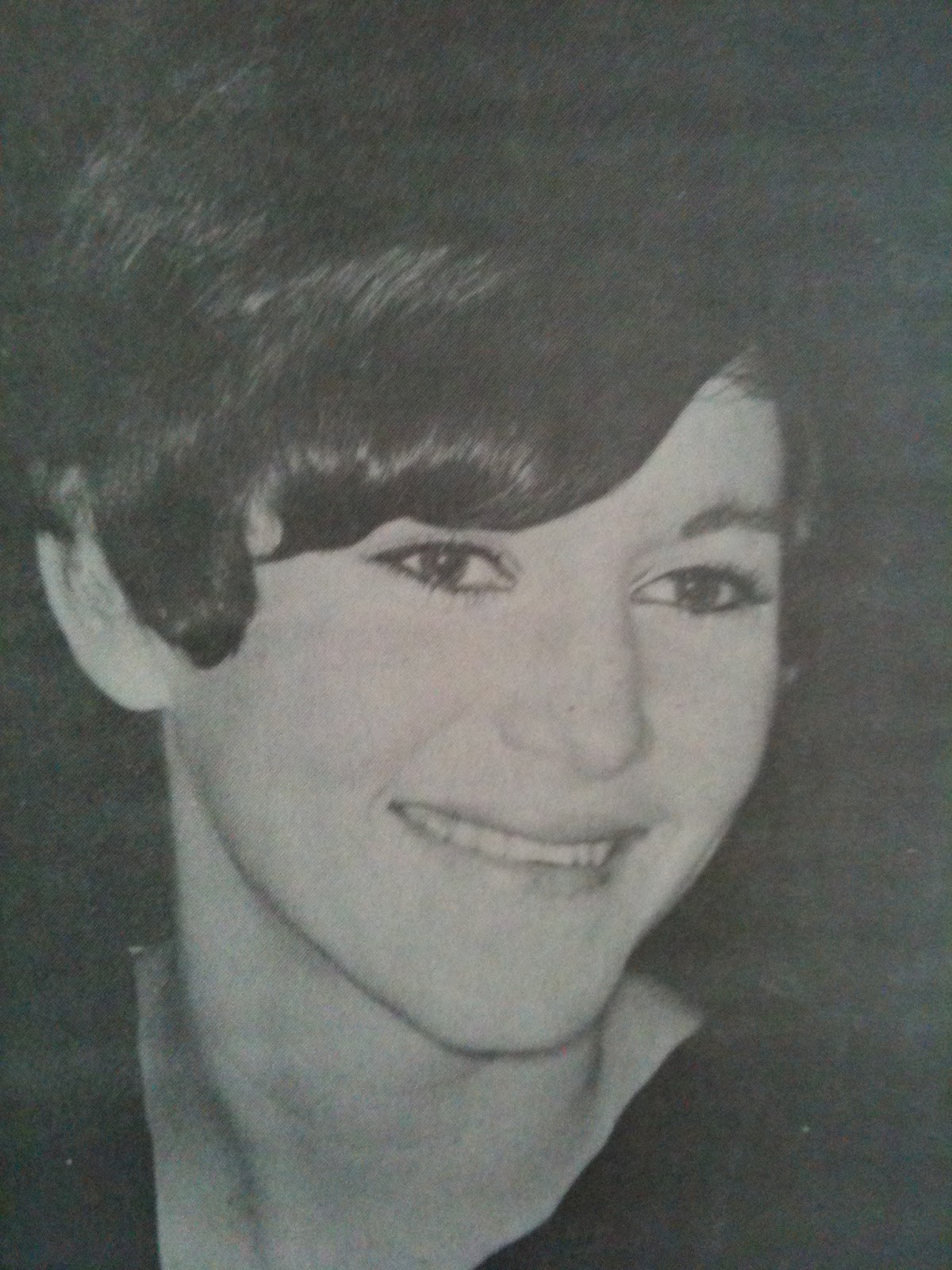
The daughter of the physician director of the Lago Hospital in Aruba, she attended medical school and trained as a Psychiatrist. She lives in Santa Fe.

Originally from Canada, she and her family left Aruba shortly after graduation. She went to medical school in Canada and became a Family Practice physician. After many years in general practice, she pursued an interest in skin care and esthetic medicine. She operates medical spas in Canada and markets a line of skin care products.

And here I am. At the time, I had no clue what I wanted to do with my life. An acute illness and hospital stay several years later would light the fire on my dream.
The three of us remain in practice.
** photos taken from the Lago School yearbook, 1969
Subscribe to:
Posts (Atom)